Upright or Spreading Plants Along a Narrow Bed?
Upright or spreading plants along a narrow bed shape its usable space and outline differently; learn which habit suits your path, planting depth and goals.

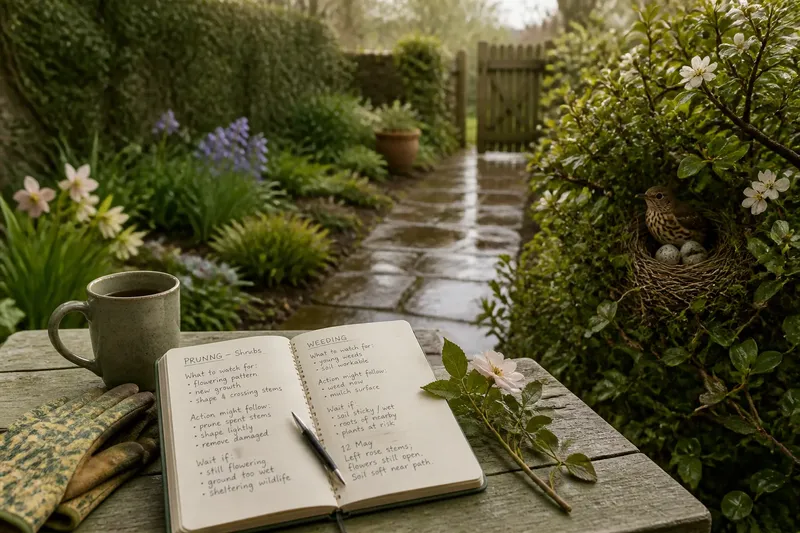
You edge the path with a spade and discover the bed is barely wider than a watering can. Upright or spreading plants along a narrow bed will determine whether that strip reads as a slim green screen, a soft ribbon, or a mix of both. The choice is not simply about plant size: growth habit decides where foliage occupies space and how the bed’s edge changes through the season.
Read the available space
In a narrow bed, consider two dimensions separately. The first is the depth of the planting area, from path to fence or wall. The second is the height and width of the outline you want to see from the path and from indoors. A plant can be tall without taking much ground, while a low one can lean far over the path.
Check the mature spread on the plant label, then look at the plant’s natural form in a nursery pot or established planting. A label gives a useful planning range, but the result in your garden also reflects light, soil and moisture. If access to a gate, tap or window matters, mark that route before choosing plants; foliage that can be tied back may still be awkward if it regularly occupies the passage.
Also notice what sits behind the bed. A fence can make upright stems easy to read against a plain background. Beside a lawn, terrace or gravel path, spreading foliage creates a more visible edge, but may blur the boundary if left unchecked.
What upright growth gives
Upright plants concentrate their growth vertically. In a bed with limited depth, that can leave more ground available for access or for a lower layer of plants. Their narrower silhouette can also preserve sightlines past a window or along a path, especially where a bulky shrub would feel close.
Look beyond height alone. Strong, narrow stems and a compact base make a more vertical accent than a tall plant whose leaves flare broadly near the ground. Delphiniums, foxgloves and some ornamental grasses can create height, but each has a different outline and seasonal presence. A plant that needs staking may also ask for more attention than its neat profile suggests.
Upright forms suit a narrow bed when you want to:
- keep a path visually and physically clear;
- draw the eye towards a doorway, seat or change in level;
- make a restrained planting against a fence or wall;
- leave room near the front for low-growing plants or open soil.
The trade-off is that a row of vertical shapes can look rigid if every plant has the same height and outline. A few changes in height or stem form soften the effect without demanding extra bed depth. Check, too, whether tall growth will shade neighbouring plants; the sun’s direction can make a narrow bed feel tighter than its footprint suggests.
What spreading growth gives
Spreading plants grow outwards, by arching stems, trailing foliage, or gradually widening clumps. They can make a narrow strip appear fuller and soften a hard edge. Low, mounding plants such as hardy geraniums or some forms of catmint can spill towards a path, giving the planting a generous outline without adding much height.
That softness comes with a spatial cost. A plant that spreads into the path takes up usable width, even if its roots remain inside the bed. Along a wall, a spreading plant may press against paving or cover access points. Its stems can also hide the base of taller plants, which may be welcome in a relaxed planting but obscure a deliberately clear outline.
Choose this habit when the bed has a little breathing room at its edge, or when you want the planting to soften paving, stones or a low boundary. It is less suited to a strip where people need to pass close by or reach something behind the foliage. Before planting, allow for the mature spread rather than judging only the small container in your hands.
Blend the two habits
Many narrow beds work best with both forms, but their positions matter. Upright plants can provide height towards a fence, while spreading plants soften the front. If the bed is visible from both sides, avoid treating it as a one-sided border: place taller plants where they do not block the view, and use modest mounds to carry the outline around the edge.
Say you have a slim bed against a fence beside a frequently used path. You could place a few upright foxgloves towards the fence and use compact hardy geraniums at the front, leaving the path-side foliage within the bed’s edge. The intended result is a taller backdrop with a softened base, while the route remains clear. If the bed is too shallow to fit both mature forms, choose one habit rather than crowding each plant into less space than it needs.
Repetition can help a mixed planting feel deliberate, but vary the spacing according to mature spread. A spreading plant needs room to extend; an upright one may need enough space for air and light around its stems. Follow the plant label and supplier’s guidance for spacing and conditions, and adapt the layout to the site.
How should you choose?
Will upright plants make a narrow bed feel cramped?
They can, particularly if broad leaves or dense stems fill the lower part of the bed. Compare the plant’s base width as well as its height, and consider how much light the bed receives.
Can spreading plants stay off a path?
Some remain compact, while others arch or creep beyond their original position. Select a form with a suitable mature spread and leave a clear margin where people walk.
Which habit suits a fence or wall?
Upright growth often makes a clean vertical accent against a plain surface. A spreading plant can soften the base, provided it does not block a gate, drain or other feature that needs access.
Can both habits go in one narrow bed?
Yes, if their mature widths fit and neither crowds the other. Put the taller form where it will not hide the lower planting, then judge the front edge from the path.
Choose by the outline
Before buying, sketch the bed from above and mark the path, fence, access points and the mature width of each candidate. Then draw the outline you want from the main viewing position: narrow and upright, low and spilling, or a restrained combination. This turns an abstract preference into a practical question about where leaves and stems will sit.
For a tight passage or a clean, narrow silhouette, upright plants are often the easier fit. For a bed that needs a softer edge and can spare room, spreading plants offer more movement. In many gardens, a limited blend gives both without sacrificing access. When comparing upright or spreading plants along a narrow bed, choose the habit that leaves the bed’s essential route and outline intact, then let the planting mature within that boundary.