Mulch at the Surface: What It Does and What It Does Not
Mulch at the surface can moderate soil exposure and slow weeds; learn what organic and mineral materials do, and what still needs attention below.
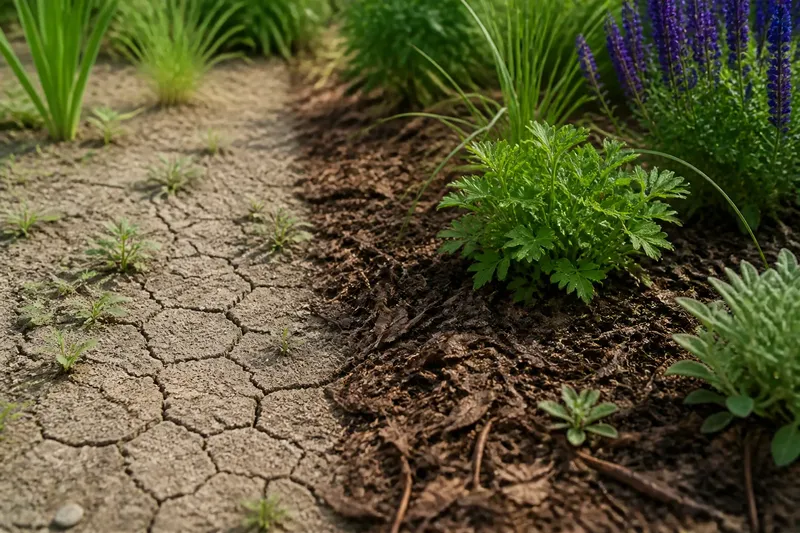
On a dry afternoon, the soil beneath a shrub can look pale and cracked while the ground under a nearby layer of bark remains darker. That contrast is one of the clearest ways to see mulch at the surface at work. It changes the conditions at the boundary between soil and air; it does not repair every problem beneath it.
The surface boundary
Mulch is material laid over the ground, rather than mixed into it. Bark, leaf mould, compost, wood chips, gravel and other coverings all sit at this boundary, but they do not behave alike. Their shared influence is indirect: they alter how exposed the soil is to sun, wind, rain and passing feet.
Think of the surface as an active interface, not a lid on an inert substance. Rain must still reach the soil, air still moves through it, and roots still depend on conditions below. A loose layer can soften the force of raindrops and reduce direct exposure. A thick, compacted or poorly chosen covering may instead impede water entry or keep the surface damp for too long.
How much a covering changes those conditions depends on its material, depth, texture and the site. A sheltered bed under a hedge is not the same as an exposed border on a windy slope. The useful question is not simply whether to mulch, but what surface condition the bed needs.
What mulch can do
A surface layer can buffer soil from sharp changes in weather. By shading the ground, it can reduce direct heating and slow moisture loss from the exposed surface. After rain, a loose organic layer may also reduce the crusting that can form on bare, fine soil. These are moderating effects, not a substitute for watering when plants need it.
Mulch can make weed management easier, too. A sufficiently continuous layer blocks light from some germinating weeds and makes small seedlings easier to pull. It will not stop every weed: persistent perennial roots can send shoots through, while seeds may sprout in the mulch itself or arrive on top of it. Removing existing weeds before spreading a covering gives it a better chance to help.
Organic materials gradually break down. As leaves, bark or wood chips decompose, they become part of the soil’s organic matter, though the pace and contribution vary with the material and conditions. This is a slow change, not an instant amendment. Mineral coverings such as gravel do not decompose into organic matter; their role is chiefly to cover the surface and alter its exposure.
There is a practical benefit beyond the soil itself. A clear, consistent surface can make it easier to spot emerging seedlings, see where the soil remains bare and keep mud from splashing onto nearby foliage. Those visible cues can help guide small, timely adjustments.
What it cannot do
Mulch cannot correct poor drainage by itself. If water collects because the ground is compacted, the site sits low, or the soil structure is unsuitable, covering the surface may conceal the symptom without changing its cause. A wet patch under mulch still needs attention to the conditions that keep it wet.
Nor can a layer replace the needs of plants. It does not supply every nutrient in a form and amount a particular plant requires, and it cannot compensate for an unsuitable location or a root system struggling in compacted ground. Compost used as a mulch contributes organic material as it breaks down, but it should not be treated as a universal cure.
Some expectations fail because mulch is applied in the wrong place. Material piled against stems or trunks can keep the base persistently damp and make inspection harder. A covering spread over young, low plants may bury them. Keep the crowns and woody bases visible, and leave enough open ground for water to enter where it is needed.
Finally, mulch does not make a garden maintenance-free. Wind can scatter light materials, weeds can establish on top, and organic coverings gradually thin or decompose. The surface needs occasional inspection, not constant attention: look for gaps, unwanted growth, standing water and contact with plant bases.
Choosing a material
For a perennial border, leaf mould or well-rotted compost can sit comfortably among plants and gradually add organic matter. Bark and wood chips tend to remain recognisable for longer, making them useful where a more durable surface is wanted. Fresh woody material is best kept on the surface rather than dug into the bed, where decomposition can temporarily affect the availability of nitrogen to nearby plants.
Gravel suits some dry, open plantings and can provide a long-lasting cover, but it does not enrich the soil as it breaks down. It may also be awkward to remove if the planting plan changes. Choose it for a clear reason, rather than assuming that a permanent-looking surface means the ground beneath needs less care.
Leaf litter is often the simplest choice beneath shrubs and trees, where it can remain in place without making the bed look untidy. In a fine, formal border, a coarser material may be more visible than intended. Appearance matters, but so do water movement, plant habit and the ease of replenishing or shifting the material later.
Product labels and local rules matter where a material has particular handling or sourcing requirements; follow the supplier’s instructions when they apply.
Applying a useful layer
Start with the condition of the ground, not the bag or barrow. Pull out established weeds, check that water can reach the soil, and remove any mulch pressed against stems. Spread material evenly enough to cover bare patches, while leaving plant crowns and woody bases clear. Avoid building a mound that sheds water away from the bed or hides the soil surface from view.
There is no single depth that suits every material and planting. Fine coverings settle and can form a dense mat; coarse chips leave more open spaces. Use a modest layer first, then observe how the surface responds to rain and drying. If water pools or runs off, loosen or reduce the covering rather than adding more.
Say you have a newly planted herbaceous border with bare gaps and small annual weeds. After removing the weeds, you spread a loose layer of leaf mould around the plants, keeping their crowns uncovered. The expected visible result is less exposed soil and fewer tiny weeds in those gaps; you would still pull persistent shoots and water the plants when the soil beneath becomes dry.
Questions about mulch?
Can mulch stop all weeds?
No. It can make conditions less favourable for some seedlings, but perennial weeds can push through and seeds can settle on top. Treat it as one part of weed control, not a barrier against every plant.
Should mulch touch plant stems?
Keep it clear of stems and woody trunks. An open ring makes the plant base easier to inspect and avoids trapping moisture directly against it.
Can I put mulch over bare soil?
Yes, provided the surface is not hiding a drainage problem or established weeds that will grow through. Check that rain can still enter the soil and that the covering will not bury low plants.
Does mulch feed the soil?
Organic mulch contributes material as it decomposes, but it is not an immediate or complete fertiliser. Mineral coverings provide surface cover without adding organic matter.
Reading the covered ground
Mulch at the surface is most useful when treated as a modifier of exposure, not a repair hidden beneath a tidy finish. Lift a small patch now and then to check whether the soil is dry, soggy, compacted or full of roots. Notice whether water enters freely and whether the plants beside it are growing as expected.
That small inspection keeps the covering in proportion. Add material where the soil is exposed and the chosen surface helps; thin it where it has become dense, misplaced or troublesome. The ground beneath the mulch remains the garden’s working part, and it is still the best place to look before deciding what the surface needs next.