A Late-Summer Inventory of Garden Materials
A late-summer garden materials inventory helps you sort reusable pots, labels and clean containers, so useful supplies are ready for next season.
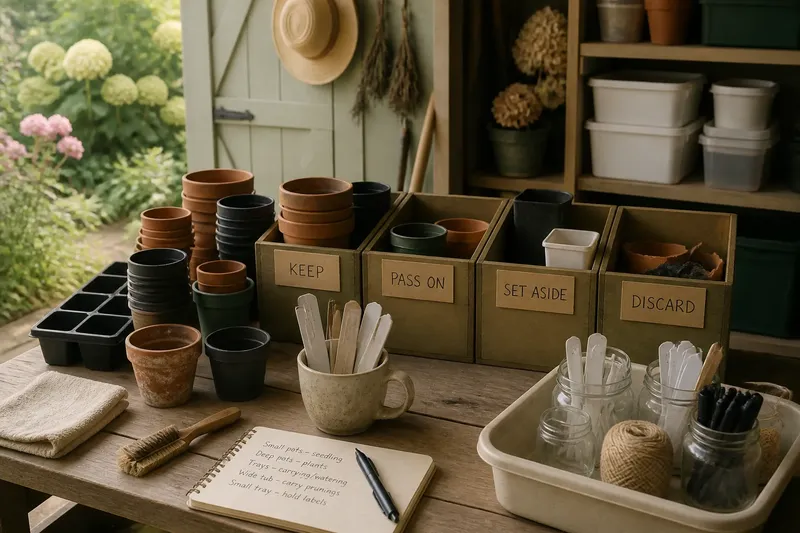
Late-summer garden materials gather in familiar places: a stack of pots beside the shed, labels in a mug by the back door, and clean yoghurt tubs waiting on a shelf. A late-summer garden materials inventory turns that drift into a calm sorting session. The point is not to make every item useful. It is to decide what deserves space, what can help another gardener, and what should wait for a project that is not ready yet.
Spread the work across a week rather than trying to empty the whole shed in one go. Choose one small category at a time, and leave the rest undisturbed until its turn. This makes it easier to notice what you already have without creating a heap that becomes another job.
Set up the sorting space
Pick a dry, accessible surface such as a potting bench, a sheltered patio table or a clear patch of shed floor. Keep a crate or box for each decision: keep, pass on, set aside and discard. A scrap of cardboard with a large handwritten label is enough to distinguish them.
Gather a soft brush, a damp cloth, a marker and a notebook. Use the brush to remove loose soil before inspecting pots and containers. If an item needs washing, keep it in a separate small group so that cleaning does not become a reason to postpone the decisions.
Choose a stopping point before you begin. For instance, finish the pot collection today, then leave labels for another afternoon. An inventory should reduce uncertainty, not turn the final warm days into a prolonged clear-out.
Sort pots by purpose
Begin with pots, trays and seedling containers. Group them by type and approximate use: small pots for pricking out, deeper pots for plants that need more room, and broad trays for carrying or watering. This is more helpful than arranging everything by colour or material, because it links each item to a task you may actually do.
Keep pots that are stable, cleanable and suited to a likely use. Check rims, bases and drainage holes. A cracked pot might still serve as a cachepot around a sound inner pot, while a sharp split or a base that no longer sits securely may make it unsuitable for ordinary handling.
Set aside unusual sizes rather than discarding them immediately. A narrow pot may be useful for a cutting, even if it rarely suits sowing. Write down the intended use on a card beside the group; if no plausible use comes to mind, reconsider whether it is taking up valuable space.
Say you find a stack of small plastic pots, several intact and two with brittle, split rims. You keep the sound ones together for spring seedlings, offer the intact extras to a neighbour who raises plants, and discard the damaged pair through the appropriate local route. The observable result is a smaller, clearly assigned stack rather than a mixed pile you must sort again.
Make labels readable
Garden labels are easy to accumulate and easy to misread. Put them together, wipe away loose soil, and separate reusable plastic or wooden labels from labels whose writing cannot be removed. If a label can be cleaned and written on clearly, it may be worth keeping even when its previous plant name has faded.
Sort by material and length if that reflects how you use them. Short labels can sit in seed trays; longer ones are easier to spot in pots or containers. Keep a few blank labels near your seed-sowing supplies, and store the rest upright in a jar or shallow box so they do not disappear beneath twine and plant ties.
Check that old writing is genuinely cleared before reusing a label. A ghost of the previous name can cause confusion later. If permanent marker remains, reserve that label for a plant whose identity is already known, or pass it on only if the new gardener can make a clear note of its use.
Choose useful containers
Not every clean container belongs in the garden. Inspect tubs, trays and jars for residue, awkward edges and a shape that suits a real task. A sturdy shallow tub might hold hand tools during a potting session; a clean, food-safe container could store plant labels or seed packets in a dry shed. A container intended for food should not be repurposed for garden chemicals.
Keep only items that have a defined destination. Write a brief note in your inventory book, such as “wide tub—carry prunings” or “small tray—hold labels”. If the purpose is too vague to name, put the item in the set-aside box rather than returning it to a shelf by habit.
Containers that have held unknown substances, strong cleaners or garden treatments should not be reused for ordinary garden storage. Follow the label, maker’s instructions or local disposal rules where they apply. Do not keep a questionable vessel simply because it has a useful shape.
Plan the week
A modest schedule helps the sorting stay contained. Adjust it to the weather and your available time; a dry afternoon is better for inspecting and wiping items than a damp one.
- First session: Gather pots and trays from the places where they tend to collect. Sort them into keep, pass on, set aside and discard.
- Second session: Clean the sound pots you intend to keep, then let them dry before stacking. Put damaged items directly into the appropriate disposal group.
- Third session: Sort labels by material and size. Remove unclear or unusable labels from the reusable group.
- Fourth session: Review clean containers, naming a specific task for each one you keep.
- Final session: Place donations in a box, label the set-aside items with a review date or project name, and return retained materials to their chosen storage places.
If rain interrupts the plan, use the time for decisions that do not require washing or drying. You can inspect labels indoors, write down intended uses, or check whether a community garden or neighbour would welcome surplus pots. Keep the donation box somewhere dry and visible so it does not quietly become permanent storage.
Keep, pass on or wait?
How do I decide whether a pot is still useful?
Look for a sound base, manageable edges and a size that matches a task you can name. If it is stable but not useful to you, consider offering it to another gardener rather than keeping it without a purpose.
Can old garden labels be reused?
Yes, if the previous writing can be removed and the new writing will remain legible. Separate labels that retain confusing marks, and avoid mixing them with a clean, ready-to-use supply.
What should I do with containers of uncertain origin?
Do not assign them a new use until you know what they held and whether the material is suitable. If that information is unavailable, set them aside for proper disposal guidance instead of storing them with clean garden containers.
How long should I keep items in the set-aside box?
Give the box a clear purpose, such as a named project or a review at the start of the next growing season. If the project passes and the item remains untouched, that is useful evidence that passing it on or discarding it may be the more sensible choice.
Store for next season
Return retained materials to places that suit their use. Put seed trays and small pots near the seed-sowing area, labels beside the notebook or seed tin, and larger containers where they can be lifted without shifting a pile of unrelated supplies. Grouping by task makes the inventory useful after the sorting session is over.
Leave enough room to see what is stored. A clear-front box or an open shelf can make spare labels visible; a simple tag on a stack can identify pot sizes or intended uses. Keep items dry and out of the way of anything that could crush, stain or contaminate them.
Before the week ends, make a short note of what you kept and what you still need for a known project. This late-summer garden materials inventory is most useful when it prevents needless collecting and leaves a straightforward starting point for the next season. Keep the note where you plan seeds or prepare pots, and let the garden’s next real task—not the shelf’s available space—decide what comes back into use.